
HAZARDOUS AREA INSTRUMENTATION
- Home >
- vocational-training >
- safety >
- hazardous area instrumentation
"The most comprehensive of all hazardous areas safety training courses."
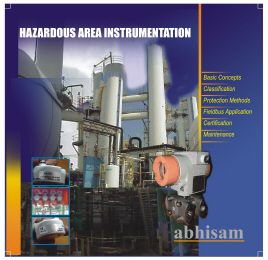
Hazardous Area Instrumentation Training Course |
| ESBN: a91-0150-2b59-00b2 |
Description: Specialized knowledge is necessary in the field of instrumentation. It involves designing, maintaining, and operating instruments and control systems in hazardous areas. This knowledge ensures safe system operation and helps prevent fires. Several methods achieve explosion protection. They include explosion-proofing, intrinsic safety, increased safety, and pressurization. Understanding these methods is crucial for instrumentation and control engineers and technicians. They design and maintain these systems.
Various standards and practices exist at national and international levels. You must follow them. You will use them while working with control systems and instruments. Workers will carry out the work in hazardous areas, this training course covers hazardous areas. It will help your employees understand the basics of preventing explosions. They will learn about standards for area, material, and temperature classification. They will also learn the reason for these standards. They will learn the different explosion protection techniques. These include intrinsic safety and explosion-proof.
The safety training material in this eLearning also covers modern topics. For example, it covers "Fieldbus in hazardous areas". Certification, marking, labeling, and the new ATEX directives are also covered. It includes a guide for thorough equipment inspections. It also covers routine maintenance to ensure it is "safe for use".
Key Benefits of the Course
This version showcases many standards and practice changes over the last few years. It especially covers Fieldbus and ATEX. It also includes equipment protection levels from IEC, Ex-ic, etc.
Designers, engineers, and technicians will find it helpful. As will safety inspectors and managers. Vivid pictures, detailed animations, and clear schematics clarify the subject for learners. The course also includes a self-assessment test and a glossary. You can learn these things at home or in the office for a fraction of the time and money spent on a classroom course. |
Hazardous Area Instrumentation Course Tour
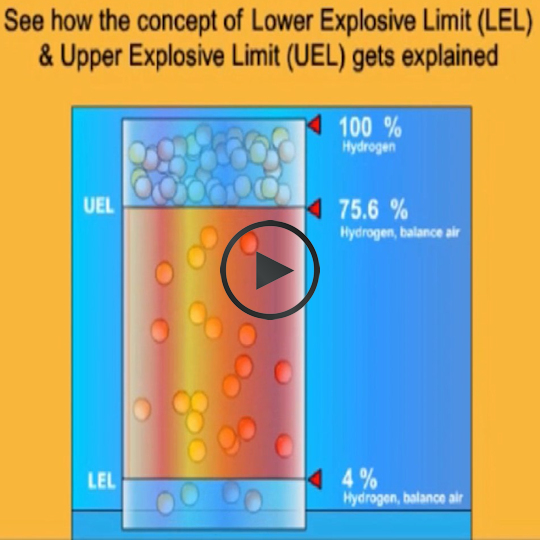
Please watch the interactive Hazardous Area Instrumentation Course intro above.
Major companies use this safety course:
This course is the oldest e-learning course in Hazardous Area Instrumentation worldwide! This version marks the fifth iteration since its 2003 debut. Engineers and managers from top companies have learned from this course. Below, we show a few examples.



The "Add to Cart" button below is only for the single student/learner version!
Within 24 hours of ordering, you'll get an email with access info.
Order for one student or multiple students.
Please Contact BIN95 for multiple user licenses and special pricing.
Course Table of Contents:
No other course (Classroom, eLearning, software, online, or video.), includes all of these modules in one course!
Module 1: Basic Concepts
Module 2: Hazardous Area Classification
- Learning Objectives
- Classification
- Hazardous Area Classification of Gas ( IEC )
- Hazardous Area Classification Dust ( IEC )
- Group Classification
- MESG
- MIC
- MIC Ratio
- Temperature Classification (IEC)
- Hazardous Area Classification (North American)
- Classification of Hazardous Locations
- Group Classification (North American)
- MESG and MIC ratios
- Article 505
- Hazardous Area Classification of Dusts
- Dust Groups
- Temperature Classification in America
- Area Classification for Flammable Gases & Vapors
- Steps to Area Classification for Gases & Vapors
- Pitfalls in the Classification Process
- More on Hazardous Area Classification of Dusts
- Example 1 chemical facility area classifications
- Example 2 chemical facility area classifications
- Example 3 chemical facility area classifications
Module 3: Methods of Protection
- Learning Objectives
- Overview of protection philosophy
- Explosion proof method -1
- Explosion proof Fundamentals
- Explosion proof Fundamentals (cont.)
- Explosion proof method - working
- Explosion proof method-flanged joint
- Explosion proof method - threaded joint
- Explosion proof method - pressure developed
- Explosion proof Pressure Piling 1
- Explosion proof Pressure Piling 2
- Explosion proof MESG
- Explosion proof Standards and practices
- Explosion proof seals
- Explosion proof - Direct & Indirect entry
- Explosion proof IEC (Cont.)
- Dust Ignition Proof
- Explosion proof Advantages
- Explosion proof Disadvantages
- Intrinsic Safety - Fundamentals
- Intrinsic Safety - History
- Intrinsic Safety Resistive circuits
- Intrinsic Safety - Inductive circuits
- Intrinsic Safety - Capacitive circuits
- Intrinsic Safety - Minimum Ignition Current
- Intrinsic Safety Resistive circuit curves
- Intrinsic Safety - Safe operating curves
- Intrinsic Safety Inductive Circuit curves
- Intrinsic Safety Capacitive circuit curves
- Intrinsic Safety - Simple Apparatus
- Intrinsic Safety - Safe area & associated apparatus
- Intrinsic Safety - Working of Diodes
- Intrinsic Safety - Working of Zener Diode
- Intrinsic Safety - Diode curve
- Intrinsic Safety Zener Diode curve
- Intrinsic Safety - How barriers work
- Intrinsic Safety - How Zener barriers work
- Intrinsic Safety - Safety parameters of barriers
- Intrinsic Safety - What are Isolators
- Intrinsic Safety - How isolators work
- Intrinsic Safety Isolator working example
- Intrinsic Safety - Infallible components
- Intrinsic Safety - Entity Concept
- Intrinsic Safety - Cable Parameters & L/R ratio
- Intrinsic Safety - Faults- Ex-ia and Ex-ib
- Intrinsic Safety - Safety description of barriers
- Intrinsic Safety - Typical IS Loop
- Intrinsic Safety - Conditions to be met
- Intrinsic Safety - How to design a practical IS temperature loop
- Intrinsic Safety Example Cont.
- Intrinsic Safety Example Cont.
- Intrinsic Safety Advantages/Disadvantages
- Pressurization & Purging concept
- Pressurization Interlocks
- Types of Pressurization-North American
- Pressurization - Type Z, X and Y
- Pressurization - IEC Norms
- Pressurization - Static & leakage compensation
- Pressurization with dilution
- Purged panels - advantages & disadvantages
- Increased Safety Basics
- Increased Safety - Enclosures & terminals
- Increased Safety - Construction
- Increased Safety - creepage & clearances
- Increased Safety - Advantages & disadvantages
- Nonincendive - Basic concept
- Nonincendive - How non incendive circuits work
- Nonincendive-Advantages & disadvantages
- Encapsulation 70 Powder filling & oil immersion
- Weather Protection Basics
- Weather Protection-NEMA codes
- Weather protection- NEMA codes
- Ingress Protection codes (IP codes)
- IP charts
Module 4: Fieldbus
- Learning Objectives
- Fieldbus in Hazardous Areas
- Fieldbus with traditional Explosion proof methods
- Non-Incendive protection
- FNICO
- Non-Incendive Diagram
- Fieldbus using Intrinsic Safety (traditional)
- Bus Powered Devices
- Separately powered devices
- IS barrier
- With Earth Barriers
- Galvanic Isolator-1
- Galvanic Isolator-2
- Cabling
- FISCO
- Cable Circuit
- Topology of a typical FISCO solution.
- Topologies FNICO
Module 5: Certification
- Learning Objectives
- Introduction
- Certification Bodies-North America
- Certification Bodies- Europe
- Marking & labeling
- How to decode marks and labels-North American
- How to decode marks & labels-European & IEC
- Testing
- ATEX Directives
- ATEX Directive-Objectives
- ATEX Directive-Employers obligations
- ATEX 100a
- CE mark & Hexagon Ex mark
Module 6: Maintenance
- Learning Objectives
- Maintenance - Introduction
- Maintenance - General guidelines-1
- Maintenance - General guidelines-2
- Inspection
- Maintenance of explosion proof instruments/equipment-1
- Maintenance of explosion proof instruments/equipment-2
- Inspection of explosion proof equipment
- Maintenance of Increased Safety equipment installed
- Maintenance of Intrinsically Safe equipment-1
- Maintenance of Intrinsically Safe equipment-2
- Maintenance of Intrinsically Safe equipment -3
- Maintenance of purged / pressurized equipment
- Conclusion
Hazardous Area Real Life Examples:
The examples in this course are from real projects. They are from installations in operating plants. They give the learner a step-by-step method to do the work. This design instance showcases one among many loop design examples.
Intrinsically Safe Loop Design Example:
We must use an open loop (Tag No. TI-101) to measure temperature. It will have a thermocouple and a temperature transmitter. We will use the principles of Intrinsic Safety. A DCS will connect to the safe area equipment. The thermocouple is mounted in a thermowell on a process reactor. This reactor sits in a dangerous area classified as Zone 1, Group II A, T4.

You have seen how detailed and comprehensive the course is. It is well organized. It has lots of graphics, animations, and real photos. They help you grasp this subject. Order your training course today!
Return to Purchase Area
A frequently asked question is how does hazardous area coverage overlap within the NEC, NEMA, IEC, and ATEX? Tap the button below for the answer.
What is the difference between IEC and NEC hazardous areas?
Hazardous area coverage overlaps several ways within the NEC, NEMA, and IEC. Each system has its own classes and requirements. But, some common ground lets them harmonize.
The National Electrical Code (NEC) in the United States provides a framework. It classifies hazardous areas. It does this based on the likelihood of explosive atmospheres. It defines different "Classes" and "Divisions" to categorize these hazardous locations. NEMA also offers guidelines and standards for dangerous places. These guides focus on building and using electrical equipment. The National Electrical Manufacturers Association (NEMA) publishes them.
In contrast, the International Electrotechnical Commission (IEC) has its own standards. They are for classifying hazardous areas. It uses a system based on "Zone" classifications. These zones define explosive atmospheres based on their frequency and duration.
Manufacturers, engineers, and safety professionals work with electrical equipment installed in hazardous areas. They need to know the similarities and differences between these standards. In practice, many companies and facilities follow a mix of these standards. They do this to cover everything. They also do it to follow regulations in their regions and industries. This course has your regulatory needs covered.
Related Titles:
Electrical Safety in HAZMAT Environments Video Course
Industrial Electrical Training Video Course Library
Electrical Troubleshooting Skills Course
PLC Training Course with Simulator
Contrologix - RSLogix 5000 Certificate Course
Online OSHA Training Video Library