
PLC Training
- Home >
- vocational-training >
- plc-training >
- onsite >
- plc training
(We Specialize in Allen Bradley SLC500, PLC5, CompactLogix, ControlLlogix RSLogix PLC training.)
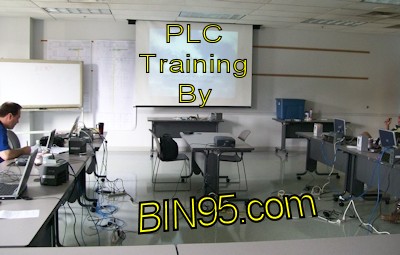
Business Industrial Network provides on-site, customized Program Logic Controller (PLC programming training) and PAC (Programmable Automation Controller), for your maintenance and engineering staff. Upon request, we will use copies of your programs in class so your team gets even more familiar with the equipment they will be working on. This is yet another way we are responding to our customer's needs. Our survey of over 300 companies and corporations reveals two well-known facts.
1. The most unplanned downtime occurs during the off shifts.
2. Many companies only have maintenance technicians with PLC Technician Training certification on the day shift.
Our studies on the true cost of production downtime prove that plc training of off-shift employees yields a great return on your investment (ROI). We have also found those who have had plc training previously, greatly benefit from our customized training. Maintenance technicians give two good reasons for receiving additional training from Business Industrial Network.
1. "I took an OEM course a few years back, but they went too fast, and taught topics I have never used."
2. "When you hardly ever have to troubleshoot a plc, you forget that classroom stuff."
We better ensure those two do not occur with our training as we also provide both PLC and PAC software courses free with on-site training, so your team can take a refresher and learn more whenever they want.
The PLC Training Solution:
Our customized PAC & PLC training for your maintenance department
(What sets us apart from your other training options.)
- We review and use the actual PAC (RSLogix 5000) & PLC programs (RSLogix 500) you use in your facility.
- We customize the topics, material, and level of expertise to match your current maintenance personnel's needs.
- We actually train each employee, not just present the information. The instructor ensures each employee can perform the task, as each task is taught.
- We deliver knowledge chosen to result in your facility becoming less OEM dependant resulting in less downtime and greater savings as a result of our training. Employees learn valuable tips that some OEMs may not think to share with you.
- We focus on real-world topics and techniques that better allow your employees to work with PLCs in the safest and most reliable way. Most others just present the 'how to', not safety, good work habits, and the best way to perform a particular function.
- We deliver the training in your facility or you can book a local conference room.
- We supplement hands-on classroom training, by giving attendees PLC simulations software, our PLC and PAC course software, and handouts or manuals so they can take a refresher and learn more anytime they want.
- We wrap up the world-class training with a quiz to assess effectiveness.
- Our legacy PLC training course using SLC 50/4 is 20% less costly than any on-site training offered by other providers.
Learning Objective:
Upon completion, attendees will have learned to work with PLCs safely and reliably while using best practices. They will be able to upload & download programs, modify existing programs, and troubleshoot using a PLC while minimizing downtime after taking this course.
3 on-site automation training types to chose from:
PLC Training Essentials: Our discounted legacy course for beginners. Allen Bradley's SLC 500/04 and RSLogix 500 were used in class, one per attendee. Great foundational and practical training for maintenance first starting out working with automation and PLCs. The most commonly used instructions are taught with the very important practical knowledge of how to work with and manage PLCs in their facility. Attendees are expected to use the software courses we provide at no additional cost after the 40 hours of hands-on to learn the lesser-used instructions and topics.
PLC Training Scholastic: This class covers the basics and a broader range of instructions and topics typically taught in school. So this can be a quicker pace class depending on attendees' past experience. These classes use Allen Bradley's MicroLogix 1400 training stations, with two attendees per PLC training station. Great for maintenance and engineers to learn the basics of the Rockwell/Allen Bradley RSLogix 500 brand and expand their knowledge as much as they can in the 40-hour time frame. The attendees receive a course manual and workbook for reference. (PLC Training Curriculum PDF)
PAC Training Essentials: This 40-hour class covers the PAC basics using Rockwell's RSLogix 5000 and Allen Bradley' CompactLogix training stations, two attendees per PLC training station. Great for maintenance and engineers to learn the basics of Programmable Automation Controllers using that software and hardware. The attendees receive a course manual and workbook for reference. (PAC Training Curriculum PDF)
Note: Those first starting out working with automation and PLCs, but want to learn RSLogix 5000, it is recommended they start with the PLC Training Essentials class first.

A trusted PLC training provider since 1995.
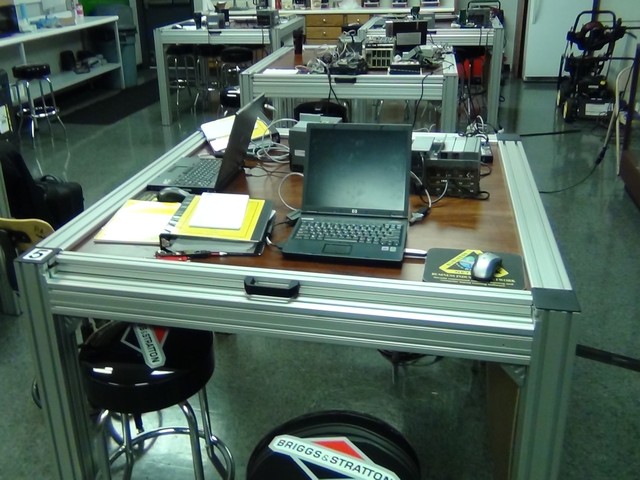
We adapt for customer's training room.
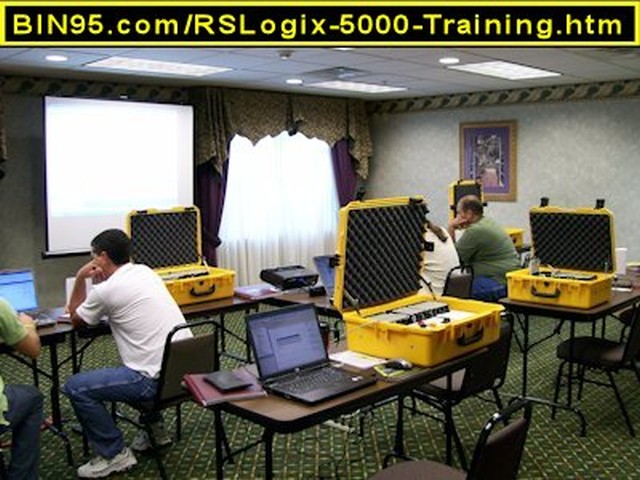
RSLogix 5000 training too.
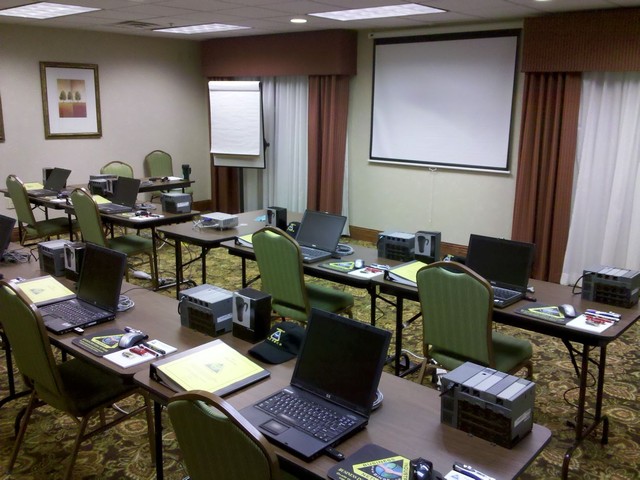
We are the Allen Bradley PLC trainer near you.
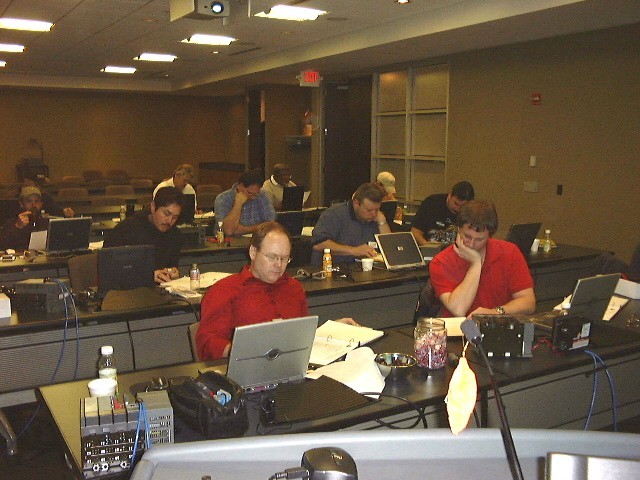
PLC training AND evaluation.
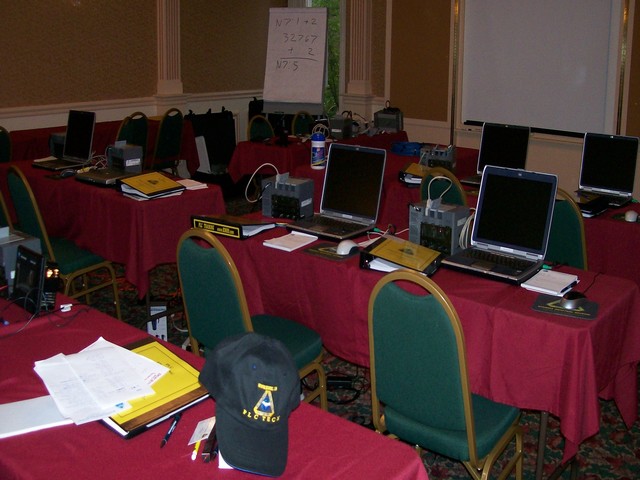
PLC training at your facilities.
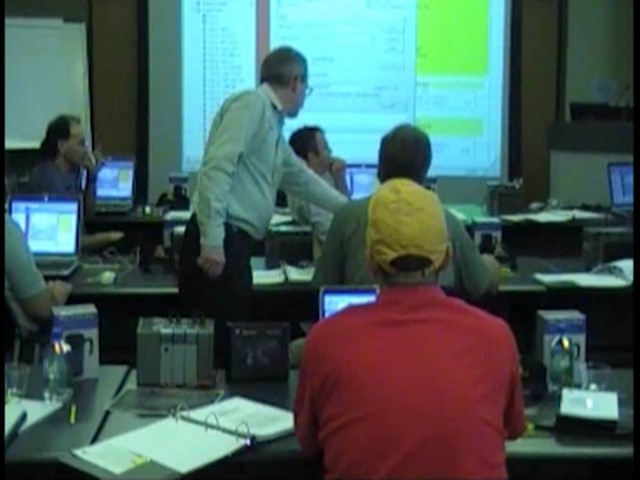
Our PLC troubleshooting training reduces downtime.
Why on site customized PLC training?
Our goal is to give your maintenance and engineering personnel the training they need to troubleshoot and maintain the equipment in your facility. Our training ranges from the basics for the beginner to advanced training to aid your current technicians in working with new assets and technologies.
Business Industrial Network recommends that at least 1 person on each shift be competent in the following areas.
Safety
Basic use of your RSLogix software
Understanding ladder logic usage
Sound practices with file management, downloading, and EPROM/Flash management
Set up and PC to PLC Communications
Setup / troubleshooting RSLinx Drivers
View the program Online and Offline
Troubleshooting actual problems
Familiar with programming conventions used in your equipment
Understanding best practices in PLC programming
How to review new asset automation before purchase.
How to and the importance of working towards being less OEM dependant
This course has also qualified under the Federal Program - Workforce Investment Act of 1998 and most state reimbursement programs. So your company could possibly get reimbursed some or all of the training fees if they chose to pursue that. We are also registered in the Federal CCR database if any Federal, State, or Local government employees are interested in this PLC training.
All of our PLC training is Hands-on with actual equipment we provide, but we use PowerPoint's as a guide and for handouts with our legacy PLC training course. Please hover over the images below to see samples of the PowerPoint presentation...
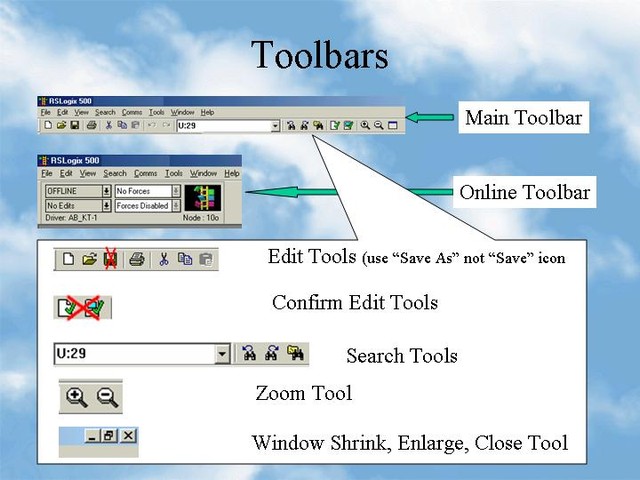
We teach best practices to reduce downtime.
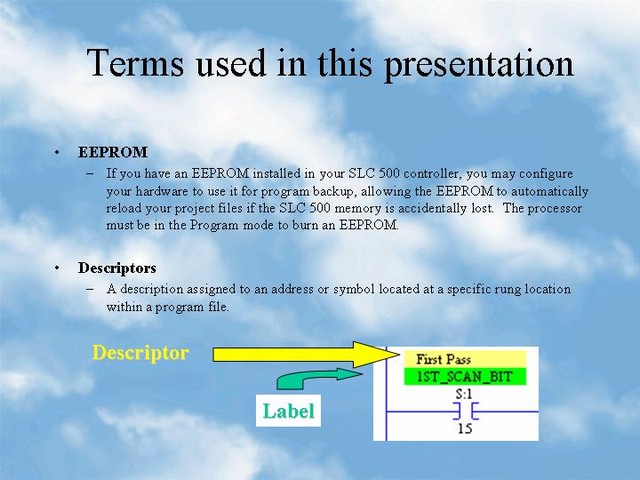
We emphasize documenting PLC programs.
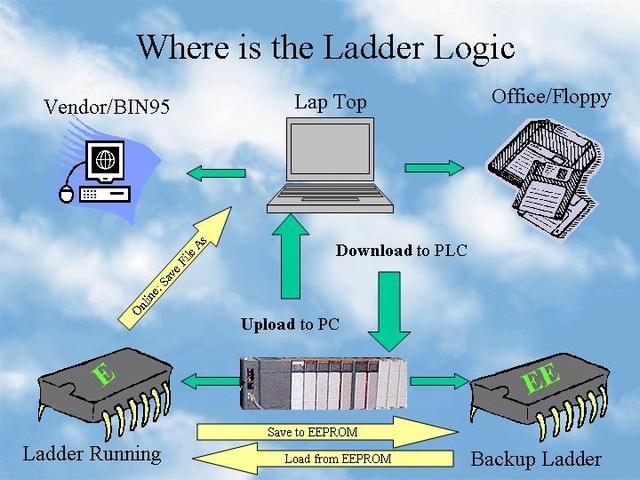
PLC program management and backups reduce downtime too.
Note: With the new Scholastic RSLogix 500 & 5000 courses, students receive printed manuals instead of digital PDF copies of handouts given during the Essentials course.
Your choice:
Legacy PLC Training: RSlogix 500 software, SLC 500/4 hardware.
New PLC Training: RSLogix 500 software, Micrologix 1400 hardware.
New PAC Training: RSLogix 5000 software, CompactLogix hardware.

Please see the Free online Industrial Training Skills Assessment Tool to see if you or your maintenance personnel need this training. Take the series of PLC Assessments provided there. You may be surprised, as the knowledge we deliver is not always in textbooks or manuals. Our On-Site Training fees are based on the same cost-effective, value-added principles and are the lowest in the industry. "The Best for Less"

Customer comments ...
One of NOAA.gov's Chief Engineers, Sabrina Taraboletti wrote a good full page review of this course to their Training Director. Too large to place on this web page, but upon request we would be happy to share the full review with you. Below are some valuable insights from her review of the class...
"...Don uses the RXLogix 500 series because it is easier to understand and troubleshoot for people who are beginners. You need to understand the basics of the system before you can move on to understanding the more complicated features of the RXLogix 5000 System. ...Analogy; you have to learn how to run Windows 7 PC edition before you tackle Windows 7 Server edition. ... My 3rd assistant engineer had done some PLC work at school and on her cadet midshipman vessels. She also felt this was an excellent course and a good starting place for those, like her, who do have a little experience with PLC's. ... I am not sure about the other FSV's, but the Shimada has a Toughbook PC with RSLogix 5000 loaded on it. I brought that with me to the class. I would show up early, and Don would work with me in understanding the differences (and similarities) between the 500 and 5000 series machines. This was a great help and I came back with a with a better working knowledge of that computer and how to use it. Upon completion of the class one receives a certificate of accomplishment, a USB Flash Drive with a ton of information on it, and an Allen Bradley Micrologix miniature PLC connected to switches and lights that you can continue to practice programming with at home. This thing is not a cheap toy, and I really feel this sets the BIN folks out ahead of the others. ... In conclusion I think this would be an excellent course for all engineers, EET's, and ET's in the Fleet, and not just for those who work on FSV's. As we continue to bring new ships into NOAA, they will undoubtedly be controlled with these devices. Everyone should have at least a basic understanding of how these things work. Don is more than willing to do on site training, and I believe this would be an excellent course to hold during winter in port at the MOC locations."
John Marques (Smith & Nephew ASD) "I recently took Don's PLC training when my company offered it. I've been in Maintenance for over 20 years, but never got involved with PLCs in depth. I could troubleshoot most things driven with PLCs by observing the real world outputs, but that only gets you so far. His course was easy to understand, and helped me a great deal regarding PLC issues. I would recommend anyone in maintenance take this course if the opportunity arises! Even if you don't get into programming, It's a good troubleshooting tool to have."
Walter J Rivers (Georgia Pacific) "Jim was very patient with our lack of pre existing knowledge and helped out and explained at every step."
Elaine Vavra (Southeast Community College Instructor) "One of the best hands-on classes I have attended. The hands-on portion really added to my limited experience in PLCs."
Jim (Maintenance Manager) "This training is not like the vendor training we have received before where they try to sell you their hardware. We where getting hands-on training after the first hour and advice that only an experienced end-user would offer. A great supplement to our tech school training. Thanks"
Jeff Rodriguez (Maintenance Superintendent at Fall River Foundry) "The PLC training I received from this organization was the best I have sat through in many years. Detailed and real on hands training and troubleshooting knowledge. I have used this organization 4 times now and it has been a big hit from all the maintenance techs I sent through. Great job from the trainer. "
Will Inglis (SB Electronics) "Don's teaching methods for the PLC Troubleshooting class were greatly impressive. He knew when to slow down to help those that were not completely understanding, and when to pick up the pace if everyone was following along quickly. The class is highly recommended, and Don makes it a great experience for everyone."
Timothy Wilson (Technician at Corning Life Sciences) "Don gave a very knowledgeable course on RS Logix and was very attentive about the standards and the class involvement was great. Don worked hard to make sure that everyone was keeping up and understood the work. i would recommend Don to anyone for the technical knowledge and the patience to get the job done."
Mark Mason (OCI Chemical DCS Administrator) "The instructor demonstrated thorough knowledge of the training materials and also provided useful real life examples."
Or if you prefer, email to training @ bin95.com, or call during normal business hours at 702-625-7715
We thank our corporate customers for investing in their employee's training and hope they enjoy the yearly ROI they see in reduced downtime and greater reliability.


















For the individual seeking PLC Training, please see below.
| Use our highly interactive PLC training distance learning certificate courses, with no travel cost? Please see ... |
|
 Automation Specialist Course Bundle